Guide students through structured research on three major Japanese festivals (Tanabata, Obon, Oshogatsu, Hanami, Gion Matsuri, or Takayama Matsuri). Students answer 6 targeted questions for each festival about timing, location, origins, activities, traditions, and cultural significance. Includes reflection prompts to deepen understanding. Perfect for sub plans, independent work, or as a bridge to deeper cultural study.
See it on Teachers Pay Teachers — $2.99
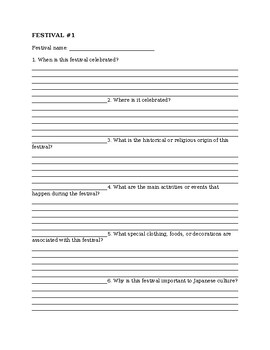
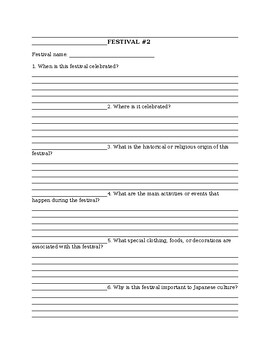
Fully editable, printable or digital. This product contains: 1 webquest overview with instructions on how to conduct research 6 guided research questions (repeated for each of the 3 festivals) Detailed worksheet pages for documenting answers for each festival List of 6 major Japanese festivals to choose from 2 reflection prompts for synthesizing learning Tips for identifying reliable sources Clean, professional formatting—printable or assign digitally Fully editable Microsoft Word document What This Is (And Why It Works): A webquest is more than "find information on the internet." It's a structured research activity where students answer specific, thoughtful questions to build deep understanding.
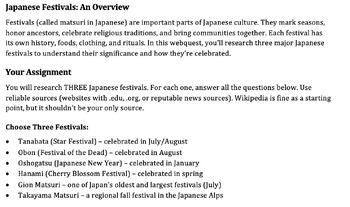
Unlike traditional research papers, webquests: – Give students clear targets (exactly what to find) – Work well for independent, self-paced learning – Are ideal for sub plans (students don't need teacher explanation) – Build critical thinking about where information comes from – Lead to synthesized, organized information (not random facts) This Japanese Festivals webquest guides students to discover the history, traditions, and cultural significance of major Japanese celebrations. This resource works in multiple contexts: Sub plans:
Fully self-contained; students don't need teacher explanation Independent work days: Let students work at their own pace AP Japanese cultural unit: Build deeper knowledge of Japanese traditions World culture or social studies: Cross-curricular learning about cultural practices Research skills practice:
Teach students how to find and evaluate reliable online sources Flipped learning: Assign as homework; use class time for discussion and follow-up Typical timeline: 1–2 class periods for independent research, 20 minutes for sharing and reflection. If you're looking for a complete, standards-aligned AP Japanese course covering all exam topics, check out the 6-Unit AP Japanese Language & Culture Yearlong Course available in my store.
Each unit includes readings, vocabulary-building activities, grammar explanations, listening practice, and assessment tools.
Designed for grades 7th – 12th.


Leave a comment