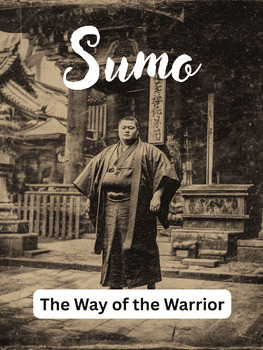
Explore the 1,500-year history of sumo wrestling and its place in modern Japanese culture. Includes accessible reading on the sport's origins as a Shinto ritual, how matches work, the ranking system, and contemporary challenges. 5 comprehension questions and 1 cultural reflection prompt. Perfect for day-one engagement, sub plans, or cross-curricular world culture units. What's Included: This product contains: 1 complete reading assignment (~1,400 words) 5 comprehension questions with space for student responses 1 reflection prompt connecting sumo to students' own cultures Clean, professional formatting ready to print or assign digitally Fully editable Microsoft Word document What You'll Teach: Students will learn about: The origins of sumo as a Shinto religious ceremony How sumo evolved from religious ritual to professional sport Basic sumo rules and how matches are won The dohyo (ring) and tournament structure The ranking system (yokozuna, ozeki, makuuchi, and lower divisions) Why sumo is culturally significant in Japan How ranking changes based on tournament performance Modern challenges facing sumo (declining domestic interest, international competition, aging tradition) Why sumo represents Japanese values of discipline, respect, and tradition Key Content: The reading covers five main sections:
See it on Teachers Pay Teachers — $2.99
What Is Sumo? An introduction to sumo as more than just a sport A Brief History From religious ritual (1,500 years ago) to modern professional sport The Sport: How It Works Rules, the dohyo, pre-match ceremonies, tournament structure The Ranking System Yokozuna, ozeki, promotion/demotion rules, earnings Why Sumo Matters to Japanese Culture National identity, discipline, Shinto traditions Sumo Today: Tradition Meets Modern Challenges International wrestlers, TV ratings, evolution How to Use It: This resource works in multiple contexts: AP Japanese cultural unit: Introduce students to a living tradition they may not know about World culture or social studies: Examine how traditions adapt to modern pressures Sports or athletics unit: Compare sumo to other sports; discuss what makes a sport culturally significant Sub plans: Fully self-contained; students can complete independently Introduction to Japanese culture:
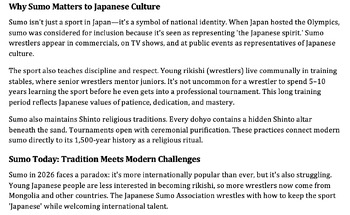
Early in the year, before diving into language study Comprehension questions are scaffolded from simple recall (what are the rules?) to critical thinking (will sumo survive modern challenges?). The reflection prompt personalizes learning by asking students to connect sumo to traditions in their own communities. Standards Alignment: This product supports: AP Japanese Language & Culture (cultural perspectives, authentic materials, practices and perspectives) Social Studies Standards (understanding cultural traditions, globalization, cultural change) Common Core ELA (reading for information, comprehension, text analysis) World Language Standards (cultural awareness, intercultural communication) Tips for Implementation: Assign the reading (15–20 minutes) as homework before the questions, or do it in class Show a short sumo match clip (YouTube has many 1–2 minute highlights) before assigning the questions to build interest Have students discuss: "What tradition from your culture has been around a long time? How is it changing?" Use the reflection prompt for informal assessment or formative feedback Create a class discussion around the "modern challenges" section—do traditions have to stay exactly the same to matter? Consider pairing with the Japanese Tea Ceremony or Haiku products for a broader cultural unit Looking for more Japanese cultural resources? If you're looking for a complete, standards-aligned AP Japanese course covering all exam topics, check out the 6-Unit AP Japanese Language & Culture Yearlong Course available in my store.
Each unit includes readings, vocabulary-building activities, grammar explanations, listening practice, and assessment tools.
Designed for grades 7th – 12th.
 Starmaker English and Journalism Tools
Leave a comment