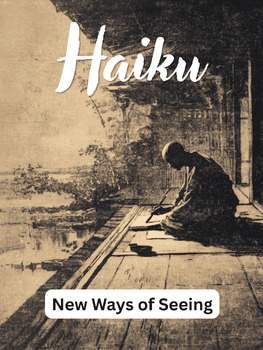
Go beyond 5-7-5 forever! Teach students the traditional form and philosophy of haiku with authentic examples from translated Japanese poetry. Includes instruction on kigo (season words) and kireji (cutting techniques), eight annotated examples, and a scaffolded six-haiku writing assignment. Students write four seasonal haiku plus two original "anytime" poems. Fully editable, printable or digital. What's Included:
See it on Teachers Pay Teachers — $2.99
This product contains: 1 complete instructional reading with explanations of haiku form and technique 8 authentic haiku examples (translated from Japanese) Detailed tips for writing original haiku 1 fully scaffolded haiku writing worksheet with space for all six poems Guided prompts for season words (kigo) and cutting technique placement (kireji) Clean, professional formatting—printable or assign digitally Fully editable Microsoft Word document What Students Will Learn: This resource teaches: – The traditional structure of haiku (5–7–5 syllables), and how to stretch this limitation – The purpose and examples of kigo (season words) – How kireji (cutting technique) creates "imaginative distance" between two parts of a poem – The importance of concrete imagery over abstract description – How to write in present tense and express a single mood – How to craft original haiku while respecting the form's constraints Key Content: The reading covers: – What a haiku is and its role in Japanese poetry – Kigo (seasonal reference) and why it matters – Kireji (cutting punctuation) and how it functions – 8 examples of translated haiku with obvious season words and cutting marks – 9 practical tips for writing strong haiku (concrete language, present tense, simplicity, etc.) The assignment asks students to write:
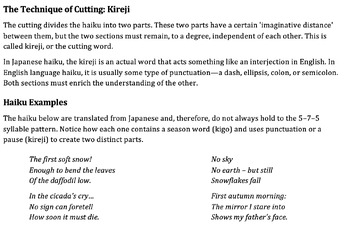
– 4 seasonal haiku (one per season): each MUST include kigo and kireji – 2 "anytime" haiku: any topic, but MUST include kireji – All poems should follow the 5–7–5 pattern as closely as possible How to Use It: This resource works in multiple contexts: Unit on Japanese poetry or culture: Introduce the form, read examples, assign the writing activity as formative assessment Creative writing class:

Use as a model for structured, form-based poetry World literature: Teach alongside haiku by Matsuo Bashō or other masters Sub plans Self-contained; students can complete independently Warm-up or early-semester engagement: High engagement, low stress, visible success The scaffolded worksheet makes it easy for students to organize their work and teachers to grade. Space for season word identification and cutting placement helps students internalize the form. Why Teachers Love This: Authentic examples from real translated haiku (not generic student samples) Clear, jargon-free explanations (kigo and kireji are defined upfront) Scaffolded worksheet removes guesswork about what's expected Students quickly succeed—they're not left staring at a blank page Works for multiple grade levels and language courses No student-facing branding or unnecessary visuals Adaptable:
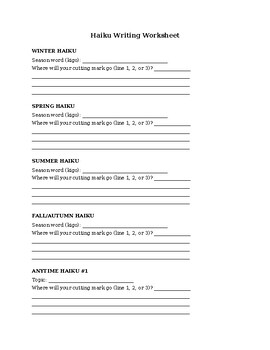
use all 6 haiku, or assign fewer if time is limited Standards Alignment: – AP Japanese Language & Culture (cultural perspectives, authentic materials) – Common Core ELA (writing standards for poetry, using precise language) – World Language Standards (cultural awareness, creative expression in target language) – Creative Writing Standards (form-based poetry, revision) Looking for more Japanese cultural resources? This haiku activity pairs perfectly with other cultural bridge materials like "Japanese Tea Ceremony: A Reading & Reflection" and "Sumo Wrestling: Tradition & Modern Culture," available in the store. If you're teaching AP Japanese, check out the 6-Unit AP Japanese Language & Culture Yearlong Course for a comprehensive, standards-aligned curriculum covering all exam topics.
Designed for grades 7th – 12th.
 Starmaker English and Journalism Tools
Leave a comment