Ethos, pathos, and logos are easy to define. Getting students to actually spot them in a real text — and then explain why a writer chose one over another — is the harder thing. That's what this unit is built to do. Unit 2 covers the three rhetorical appeals plus five essential rhetorical devices (diction, syntax, imagery, figurative language, and tone) over 10 days. Students move from recognition to analysis to original writing, so by the end they're not just labeling appeals — they're arguing about how persuasion works. That's the skill the AP exam actually tests. What's Included (18 resources, 160+ pages):
See it on Teachers Pay Teachers — $16.99
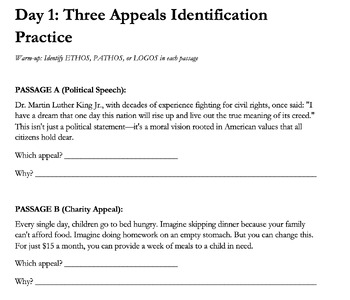
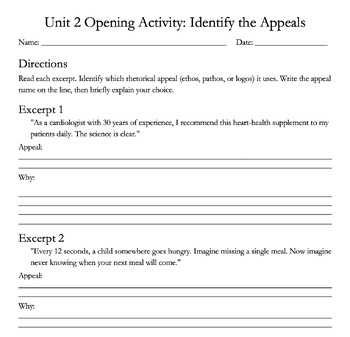
77-Slide PowerPoint — Instruction on ethos, pathos, logos, and all five rhetorical devices, with real-world examples from speeches, ads, editorials, social media, and nonprofit communications. Guided practice and hinge question checks built in throughout. 10-Day Scaffolded Progression — Moves from guided instruction (appeals spotting) to independent passage annotation to original writing. Each day builds on the last. Passage Analysis Workbook — 5 complete passages with four-part scaffolded templates. Students practice the exact analytical moves they'll need before writing independently. Writing Assignments (4 total) — Persuasive letter using all three appeals; product pitch applying appeals to marketing; counter-argument using appeals in argumentation; device-comparison essay where students rewrite the same passage two ways and compare them side by side.
Differentiated Homework Packets (2 versions) — Regular packet (15–30 min/night): Diction Detective, Syntax Scavenger Hunt, Tone Analysis, device matching, real-world appeals. Advanced packet (30–60 min/night): Connotation Chains, Syntax Transformation, Tone Shifts, Device Chains, Pitch Competition. Unit Assessment — New passage with full answer key, grading guide, and rubric. Teacher notes flag common student errors and reteaching strategies. Answer Keys and Rubrics — Included for all practice sets, writing assignments, and the assessment.
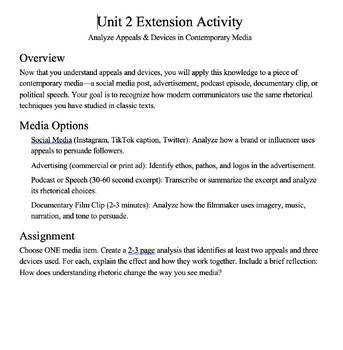
The device-comparison writing assignment is the one students remember. Rewriting the same passage in two different stylistic registers forces them to feel how diction and syntax change the effect — which is a different kind of understanding than labeling devices on a passage someone else wrote. The two differentiated homework tracks mean you're not choosing between challenging your strong students and losing your struggling ones. College Board alignment covers AP Lang Units 5–6 (Rhetorical Choices, Rhetorical Appeals) and builds directly toward FRQ #2 (Rhetorical Analysis Essay) and FRQ #3 (Argument Essay). CCSS RI.9-10.6 (analyzing author's choices for effect) is also addressed. All materials are editable Word documents and PowerPoint — no school branding on student-facing pages. This is Unit 2 of a complete, nine-unit AP Language and Composition curriculum.
It pairs with Unit 1: Rhetorical Situation and Five Canons of Rhetoric to build the full persuasion foundation students need before writing their first rhetorical analysis essay. The complete course is available as the AP Language and Composition Complete 9-Unit Curriculum Bundle at over 30% off individual unit prices. If this resource saved you prep time, please leave a rating under My Purchases Provide Feedback. Every review earns you TpT Credits toward future purchases — roughly $1 in credits for every $10 reviewed. Follow Starmaker English & Journalism Tools to be notified when new resources launch or go on sale. Keywords:
AP Language and Composition, AP Lang Unit 2, ethos pathos logos, rhetorical appeals, rhetorical devices, AP Lang curriculum, rhetorical analysis, diction syntax imagery, FRQ prep, AP exam prep, College Board aligned, high school ELA, persuasion techniques, AP Language and Composition unit, secondary English
Designed for grades 9th – 12th.
 Starmaker English and Journalism Tools
Leave a comment