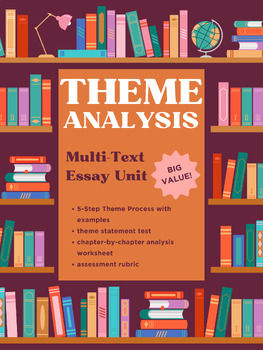
Theme is one of the most misunderstood concepts in secondary ELA. Students consistently confuse topic with theme, and most resources don't actually show them the difference — they just restate it. This unit teaches the move from plot summary to genuine theme statement through a concrete, repeatable process. The 5-Step Theme Process walks students from summary to statement: write a one-sentence plot summary, identify the topic, identify the insight the text generates about that topic, identify how the plot carries that insight, then write a theme statement specific enough to be earned by the text but general enough to apply beyond it.
See it on Teachers Pay Teachers — $7.00
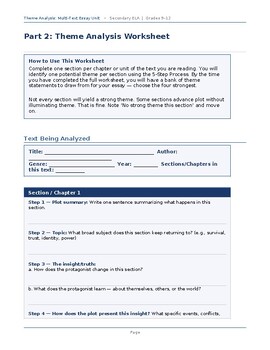
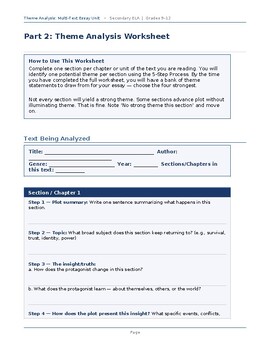
A full comparison table shows weak statements alongside strong ones — "survival is a theme" next to "when survival requires abandoning one's ethics, the cost is not just others' lives but one's own humanity." Students can see exactly what the difference looks like before they write. The chapter-by-chapter worksheet handles texts with up to 12 sections and works with any novel, short story, or film. The essay assignment asks for four developed theme statements, eight cited quotations, and a structured argument. The rubric reflects that bar. What's Included:
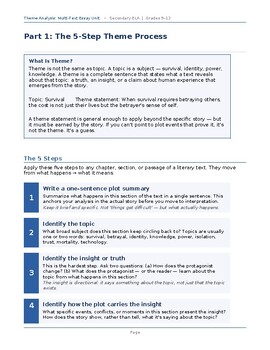
5-Step Theme Process with examples Topic vs. theme statement comparison table with five examples Theme statement test Chapter-by-chapter analysis worksheet — up to 12 sections, works with any text Essay assignment with requirements and formatting guide Assessment rubric Teacher notes with suggested reading list How to Use It: Works with any literary text at the secondary level. Eighteen pages, text-agnostic, ready to drop into any novel unit. Particularly strong with SF and dystopian texts where theme does a lot of the structural work — 1984, The Handmaid's Tale, Ender's Game, The Road — but equally usable with To Kill a Mockingbird, Macbeth, Night, The Kite Runner, and most other taught texts.
I've run this process with struggling readers and with students who were already writing at a college level. It works across that range. About This Resource: The 5-Step Process exists because "identify the theme" is not an instruction — it's an outcome. Students need the intermediate steps made explicit.
Once they have them, the process becomes automatic quickly, which is the point. This resource fits naturally into several larger units available in the store: The Complete SF Literature Unit — 9 Resources Grades 9–12 ELA The Complete Creative Nonfiction Course The AP Language & Composition Complete 9-Unit Curriculum Bundle If this resource saved you prep time, please leave a rating under My Purchases Provide Feedback. Every review earns you TpT Credits toward future purchases — roughly $1 in credits for every $10 reviewed. Follow Starmaker Tools for Teachers to be notified when new resources launch or go on sale.
Keywords: theme analysis lesson, literary theme worksheet, theme statement writing, novel unit ELA, theme vs topic, theme analysis essay, literary analysis secondary ELA, novel study grades 9-12, theme analysis any novel, 5-step theme process, high school ELA theme, dystopia theme analysis, secondary ELA writing unit
Designed for grades 9–12.


Leave a comment