Unlock the boundless world of science fiction and empower your students to explore the "what if" questions at the heart of speculative storytelling with our comprehensive "Short Story to 'What If?' Project" bundle. What's Included (5 Documents + Exemplar): 1. Project Template The core assignment with five components: What If Statement (5 points), Story Summary (10 points), Analysis Paragraph (10 points), Four Alternative Scenarios (20 points), and Science Behind the Story (10 points). Total: 55 points. Clear, manageable, and builds critical thinking at every stage. 2. Rubric & Scoring Guide A detailed criterion-referenced rubric that evaluates each of the five project components.
See it on Teachers Pay Teachers — $10.39
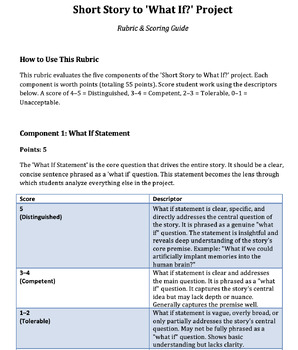
Includes Distinguished/Competent/Tolerable/Unacceptable descriptors with exemplar language, point scales, and a grade conversion guide (A–F). Teachers know exactly how to score; students understand what excellence looks like. 3. Curated Science Fiction Story List Six recommended stories (from classic to contemporary) with full metadata: the central "what if" question, theme, difficulty level, reading time, tone, and direct links to free texts. Stories include Philip K. Dick's "We Can Remember It For You Wholesale," E. M. Forster's "The Machine Stops," Ray Bradbury's "There Will Come Soft Rains," Arthur C. Clarke's "The Sentinel," William Gibson's "Burning Chrome," and Judith Merril's "That Only a Mother." Teachers are not limited to this list—any SF story with a clear "what if" works, but these recommendations save research time and offer variety in difficulty level and themes.
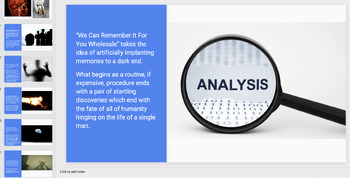
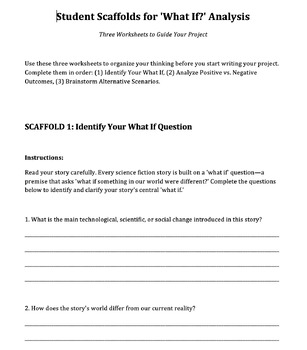
4. Student Scaffolds (3 Worksheets) Three guided worksheets that walk students through the entire project: Identify Your What If: Five guiding questions to clarify the story's central premise Analyze Positive vs. Negative Outcomes: Six questions that build toward the analysis paragraph, exploring how the "what if" unfolds and whether the story's ending is optimistic or cautionary Brainstorm Four Alternative Scenarios: Brainstorm prompts and space for developing each alternative scenario, plus a self-check rubric All scaffolds are generic and work with any story—on the curated list or any SF story the teacher chooses. 5. Exemplar Project (PowerPoint) A complete, student-facing example using "We Can Remember It For You Wholesale" by Philip K. Dick.
Shows students what a Distinguished project looks like: a clear "what if" statement, comprehensive story summary, sophisticated analysis, four creative alternative scenarios, and researched science backing. Visual format makes it engaging and easy to follow. This is great for a final presentation to the class and ease of construction for the students as the format can be adapted to Google Slides or Canva or a host of other tools. Why This Bundle Works: This is not just a project template. It's a complete unit scaffold covering: Clarity: The rubric eliminates guesswork about grading Choice: Six curated stories + teacher flexibility to use any SF story Scaffolding:
Student worksheets guide the thinking process before writing Modeling: A full exemplar shows students exactly what to aim for Flexibility: Works for high school (grades 9–12) and college intro courses Perfect as a standalone project or as part of a larger science fiction unit. Students practice identifying the speculative premise at the heart of any story, analyzing consequences, and thinking creatively about alternatives—skills that transfer across literature and beyond. Created by: A professional journalist and education expert with 24+ years of experience teaching critical thinking, analysis, and creative writing. And I'm a huge fan of science fiction! Grade Level: High School (grades 9–12) and College Intro to Science Fiction Format: 5 Microsoft Word documents + 1 PowerPoint exemplar, ready to print, customize, or use digitally.
Designed for grades 9–12.


Leave a comment