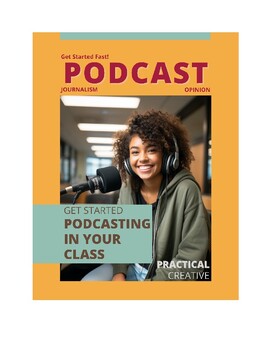
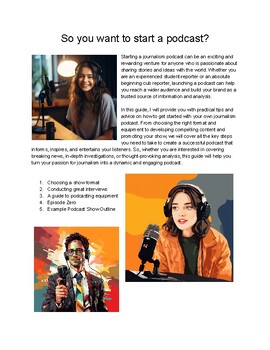
Transform your students into podcasters—writers, journalists, and storytellers—with our complete "Podcast Startup Unit." This comprehensive 5-document bundle gives you everything needed to guide students from format selection through final recording, editing, assessment, and reflection in just 4 weeks. What's Included: 1. Podcast Startup Guide (20 pages) Your comprehensive introduction to podcasting in the classroom, covering: the world of podcasting, 20 podcast show formats (from interview to investigative), 8 tips for better interviews, equipment options (smartphone to professional studio), the importance of "Episode Zero," and a detailed example podcast outline. Perfect for student and teacher reference throughout the unit. 2. Podcast Project Rubric (100 points) A detailed rubric evaluating both PROCESS and PRODUCT. Process criteria (40 points) assess Format Selection & Planning, Episode Planning & Preparation, Interview Preparation/Research, and Recording & Equipment Management. Product criteria (60 points) evaluate Audio Quality & Listenable, Content & Structure, Guest/Interview Quality, and Professionalism & Effort.
See it on Teachers Pay Teachers — $8.79
Clear descriptors for each criterion (Distinguished/Competent/Tolerable/Unacceptable) mean students know exactly what excellence looks like, and teachers grade consistently. 3. Format Selection Sheet Students explore three core formats—Interview, News Roundup, and Solo Commentary—then justify their choice based on interests, skills, and available resources. Includes a realistic resource assessment (Do you have a guest? A quiet space? Equipment?) and teacher sign-off before students move to planning. Prevents students from choosing formats they can't actually execute. 4. Episode Planning Templates (3 versions) Three separate, format-specific worksheets walk students through planning their episode: Interview Template:
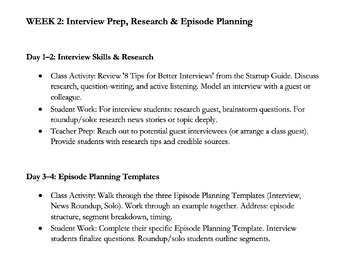
Guest research, interview questions (8–12), episode structure, equipment setup News Roundup Template: Story research (3–5 stories), segment breakdown, script/notes, timing Solo Commentary Template: Topic/angle, research sources, episode structure, optional guest clips Each template includes realistic timing estimates and logistics checklists to keep students on track. 5. Teacher Quick-Start Checklist (4-Week Implementation Timeline) A day-by-day breakdown of how to run this unit in exactly 4 weeks: Week 1: Intro to podcasting, format selection, equipment orientation Week 2: Interview skills & research, episode planning templates, guest confirmation Week 3: Recording sessions, basic editing, Episode Zero self-assessment, peer feedback Week 4: Final revisions, grading & feedback using the rubric, reflection & celebration Each day includes:
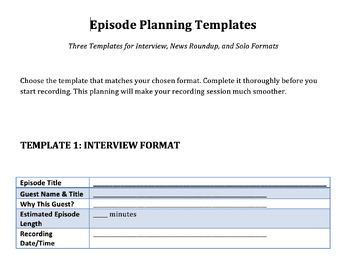
class activities, student work, and teacher prep tasks. Includes optional extensions (multi-episode series, guest host, publishing to platforms) and a final success checklist. Why This Bundle Works: This is not just a guide or a rubric—it's a complete unit scaffold that takes the guesswork out of teaching podcasting. Teachers get: Clarity: The rubric eliminates grading ambiguity. Process assessment rewards planning; product assessment rewards execution. Choice: Three format templates let students choose what interests them, but within realistic constraints.
Structure: A detailed 4-week timeline means no wondering "what comes next?" Scaffolding: Format Selection Sheet Episode Planning Template Rubric-guided assessment creates a clear learning progression. Perfect for high school journalism, English classes exploring media literacy, or any class wanting to develop student communication, reporting, and storytelling skills. Students emerge with a real podcast episode and deep understanding of audio production, interviewing, and project management. Created by: A professional journalist and educator with 24+ years of experience teaching student journalists, podcast production, and multimedia storytelling. Grade Level: High School (grades 9–12) and College Intro to Journalism Format: 5 Microsoft Word documents, ready to print, customize, or use digitally.
Designed for grades 9–12.
 Starmaker English and Journalism Tools
Leave a comment