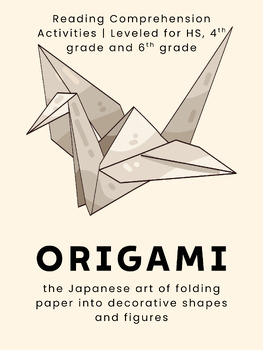
This origami reading comprehension activity spans grades 4 through high school and is built for multiple subjects. Use it in AP Japanese Language and Culture, World History, Cultural Studies, Art History, or English Language Arts. Three reading passages—one for each grade level—take students through origami's journey from ancient China and Japan through the Edo period to Akira Yoshizawa's modern innovations.
See it on Teachers Pay Teachers — $8.99
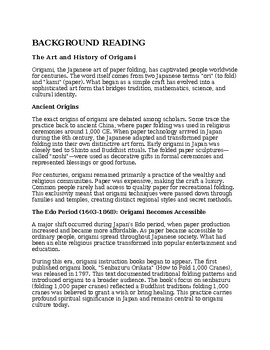
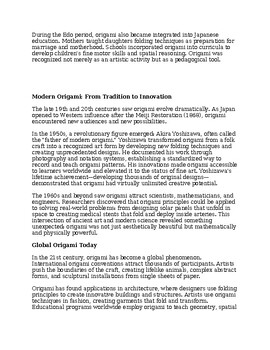
Along the way, students encounter why Japanese communities embraced paper folding, how it became accessible to ordinary people, and how it ended up in medicine, architecture, and space exploration. What's included: Three differentiated reading passages (grades 4, 6, and high school) Comprehension question sets for each level (multiple choice, fill-in-the-blank, analytical questions) Answer keys with scoring guides and teaching notes Standards alignment to Common Core and AP standards Differentiation for advanced learners, developing readers, and ELL students Extension activities tying origami to math, science, and cultural analysis The high school version pushes toward critical thinking:
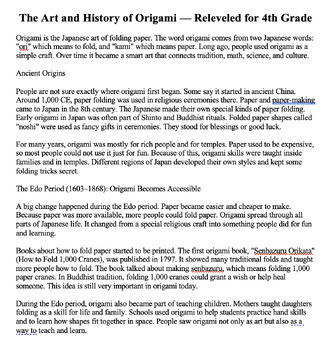
students analyze how tradition and innovation coexist in origami, examine why it crossed cultural boundaries, and explore its use in solving real problems. The 6th-grade version builds toward that by focusing on factual understanding and early analytical reasoning. The 4th-grade version starts with concrete comprehension and vocabulary support.
Use these readings for homework, classwork, or flipped classrooms. The comprehension questions work as quick formative assessments before moving to writing assignments or discussions. Students can also connect the readings to hands-on origami projects, cultural research, or essays exploring how traditions spread globally.
The materials are ready to print or use digitally—no prep needed. Student-facing pages contain no institutional branding, so they fit any classroom seamlessly.


Leave a comment