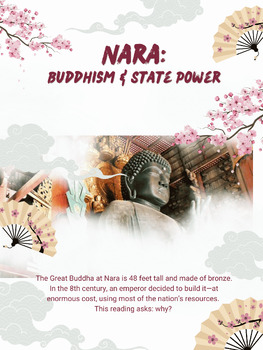
The Great Buddha at Nara is 48 feet tall and made of bronze. In the 8th century, an emperor decided to build it—at enormous cost, using most of the nation's resources. This reading asks:
See it on Teachers Pay Teachers — $2.99
why? What does that tell us about power, religion, and how states use monuments. Students see how Buddhism and political authority intertwined in Japan, and how a physical object carries centuries of meaning.
What's Included: Complete reading (~1,000 words): Nara period history, Buddhist architecture, the Great Buddha, temple culture, and preservation 5 comprehension questions (recall through analysis) 2 reflection prompts on religion, power, and spiritual experience Photo space for the Great Buddha Fully editable, ready to print or assign digitally Works in:
AP Japanese, world history, Asian religions, art and architecture, sub plans, grades 7–12, ELD/ELL adaptable Want comprehensive Japanese cultural coverage? See our 10-Location Japanese Culture Reading Bundle. If you're looking for a complete, standards-aligned AP Japanese course covering all exam topics, check out the 6-Unit AP Japanese Language & Culture Yearlong Course available in my store.
Each unit includes readings, vocabulary-building activities, grammar explanations, listening practice, and assessment tools.
Designed for grades 7–12, ELD/ELL adaptable.
 Starmaker English and Journalism Tools
Leave a comment