
When NPR started tracking the demographics of its sources, 77 percent were white. The number fell once reporters could actually see the pattern. You can't fix what you haven't noticed. This tool brings professional source-tracking practice into the student newsroom. It's adapted from frameworks used by NPR, the BBC, The Open Notebook, and the American Press Institute — and designed specifically for scholastic journalism. What's inside (8 pages): Why We Track and How to Ask Explains the professional practice with real newsroom context. Includes a sample script students can use to ask sources about their demographics without being awkward about it. Defines the four source roles used throughout:
See it on Teachers Pay Teachers — $3.99
Expert/Analyst, Official/Spokesperson, Community Member/Affected, Subject/Profile (adapted from NPR and WHYY source audit frameworks). Per-Story Tracker Two complete trackers per page. Eight source rows each. Columns for name, role in story, gender, age range, race/ethnicity, and notes. A quick reference key at the bottom gives standardized options for each field so there's no ambiguity. Students fill one out per assignment. Class Aggregate Tally Four separate tally tables: Gender, Age Range, Race/Ethnicity (full breakdown including a "school/community %" column), and Source Role. The comparison column is the key — students calculate their percentages and compare them to actual school demographic data from their district.
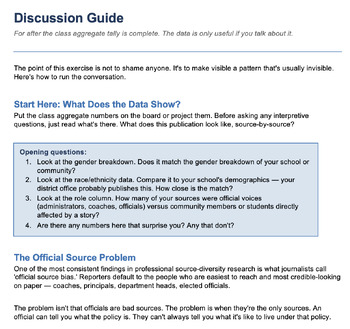
Teacher Discussion Guide Three structured discussion sequences covering what the data shows, official source bias, and whose stories get told. Includes a vague vs. specific goal comparison table, notes on how to handle sensitive dynamics in the debrief, and a guide to finding school demographic data online. Connects directly to the SPJ Code of Ethics. This tool is part of the Interview Techniques Bundle — a complete 3-week journalism unit covering interview skills from first question to published story. Both are included in the Complete High School Journalism Curriculum Bundle. If this resource saved you prep time, please leave a rating under My Purchases Provide Feedback. Every review earns you TpT Credits toward future purchases — roughly $1 in credits for every $10 reviewed. Follow Starmaker English & Journalism Tools to be notified when new resources launch or go on sale.
Designed for grades 8th – 12th.


Leave a comment