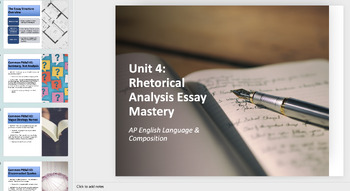
The rhetorical analysis essay is where AP Lang students either prove they've been reading analytically all semester — or reveal they've been summarizing. This unit is built for the gap between those two outcomes. Unit 4 teaches students to write full-length rhetorical analysis essays using the official AP rubric, actual College Board sample responses, and the authentic 2018 FRQ prompt. Over 15 days they move from rhetorical situation and strategy identification through CEAA paragraph structure to timed writing under exam conditions — the complete progression from understanding persuasion to arguing about it in writing. What's Included (12 resources, 85-slide PowerPoint): 85-Slide PowerPoint — Rhetoric fundamentals, rhetorical situation, the three appeals, rhetorical strategies (diction, syntax, imagery, figurative language, antithesis, anaphora), essay structure, and 20 practice problems with detailed answers.
See it on Teachers Pay Teachers — $16.99
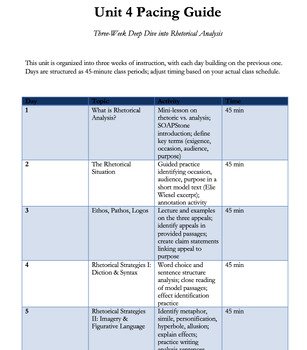
Deep analysis of Lindbergh, Wiesel, and Bradbury passages with side-by-side annotations students can emulate. 15-Day Pacing Guide — Moves from foundational concepts through guided practice to independent timed writing. Day-by-day breakdown with timing and flexible pacing notes for standard 45-minute periods. Opening Activity: 2018 FRQ Analysis — Lindbergh's "Gift from the Sea" with guided questions on rhetorical situation and persuasive technique. Students identify occasion, audience, purpose, and initial observations before the full unit instruction begins.
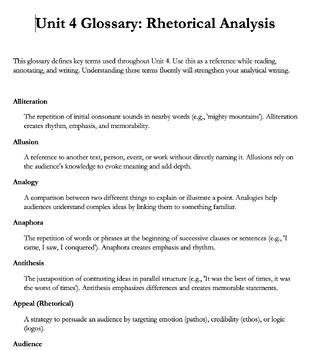
36-Term Glossary — Antithesis, anaphora, kairos, SOAPStone, juxtaposition, and 31 more terms, each with contextual examples drawn from the unit's anchor texts. Discussion Prompts and Hinge Questions — Eight diagnostic prompts organized by skill level: rhetorical situation, precise strategy identification, defensible claims, and tone shift analysis. Teacher notes explain what each response reveals and when to reteach. Two Practice Essays — Untimed passage (Wiesel's Nobel Peace Prize acceptance speech) for careful analysis and revision, plus timed passage (Bradbury on consumerism) under exam conditions. Self-assessment framework and teacher feedback guidance included.
Annotated College Board Sample Responses — Complete 9/9 essay with line-by-line commentary on what earns top marks, alongside a 5/9 essay annotated to show exactly where analysis breaks down. The direct comparison tells students more about the standard than any rubric description can. Essay Writing Template — CEAA paragraph structure (Claim, Evidence, Analysis, Application) modeled for introduction, body paragraphs, and conclusion. "What to Avoid" section addresses six common pitfalls with corrected versions. Teacher's Notes — Official AP rubric with criteria for scores 1–9, three case studies of common student errors (summary disguised as analysis, vague strategy naming, isolated quotes without explanation), each with weak and strong versions side by side. Three bonus FRQ prompts included.
Peer Review Protocol — Structured self-assessment before peer exchange, four-part review process, explicit guidance on specific and actionable feedback, and an optional revision pathway so students can track their own growth. Unit Overview and Learning Objectives — Six College Board-aligned outcomes: rhetorical situation, precise strategy identification, reader effect analysis, defensible thesis writing, full-length CEAA essays, and timed practice. The annotated sample responses are the piece teachers come back to. A 9/9 essay and a 5/9 essay on the same prompt, both marked up — students can see the difference between proficient analysis and genuinely sophisticated analysis rather than just being told it exists. That's what moves scores.
College Board alignment directly addresses FRQ #2 (Rhetorical Analysis Essay) using the official rubric and authentic exam materials. All documents are editable Word files and PowerPoint — no school branding on student-facing pages, professional formatting throughout.
Designed for grades 9th – 12th.
 Starmaker English and Journalism Tools
Leave a comment