You’re putting together a unit on Japanese culture, and every reading you find either talks down to your students or requires them to be fluent readers. Or you’re teaching AP Japanese and none of the standard materials actually feel like cultural content—they’re just vocab drills dressed up as readings. The origami materials solve both problems.
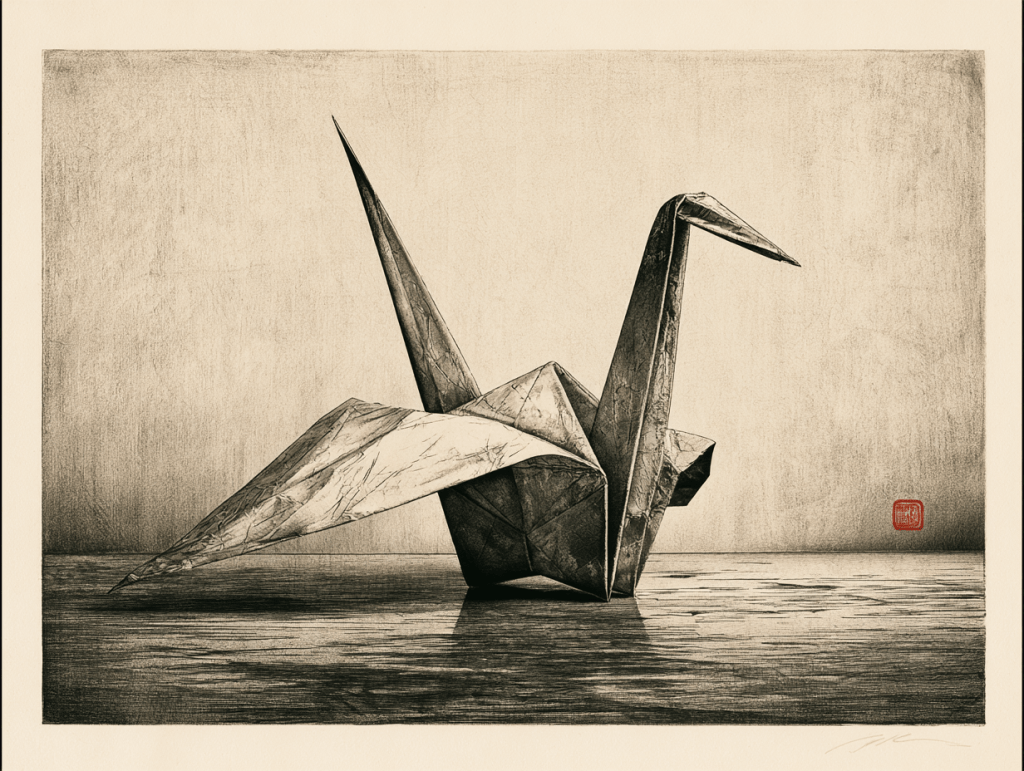
I got tired of differentiated readings that were just the same text with easier vocabulary. You copy-paste the same passage three times, delete some words, add some illustrations, and call it a three-level resource. Students know it’s the same thing. It feels condescending.
These readings actually change. The 4th-grade version tells you what happened: origami comes from Japan and China, it uses paper, people fold it into shapes. The 6th-grade version explains why it mattered: paper was precious in Japan, communities gathered around it, it spread across borders. The high school version asks you to think about contradiction: how did something ancient become a solution to modern problems? Why does origami work in medicine and space exploration if it’s just… folding paper?
Each one comes with questions built for that level—multiple choice for the 4th graders, a mix of short answer and analysis for the 6th graders, essay-style questions for the high schoolers. The answer key tells you what your students will probably get wrong (spoiler: they always confuse the Edo period with the Meiji Restoration) and how to reteach it. You also get extension ideas—how origami connects to geometry and engineering, how to run a discussion about tradition and innovation, how to turn the readings into essays.
At $12, you get all three levels, the questions, the answers, and the extensions.
Grab the origami reading pack here.
Use it when you need a quick reading for Friday. Or use it as your intro for a whole unit. Works in AP Japanese, World History, Cultural Studies, Art, or ELA.
 Starmaker English and Journalism Tools
Leave a comment